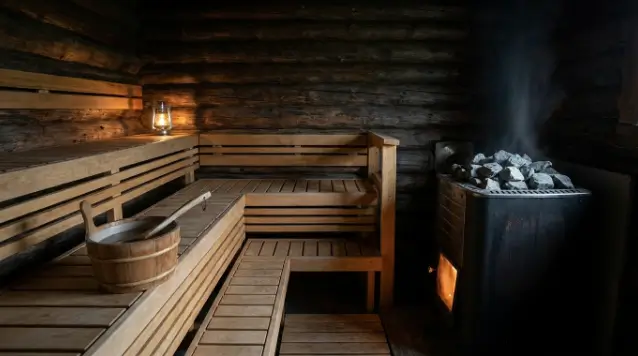
A traditional sauna needs a low fresh-air inlet near the heater, a high exhaust vent on the opposite wall or ceiling, and roughly six air changes per hour to stay comfortable and dry. Get this wrong and a cabin either feels stale and stuffy or loses heat faster than the heater can replace it. Good ventilation is also part of what makes the documented cardiovascular associations of regular sauna bathing apply to a session that is comfortable enough to actually repeat.
Why Airflow Direction Matters More Than Airflow Volume
A sauna is not sealed like a refrigerator, and it should not be. The goal is a slow, steady path of air entering low near the heater, warming as it rises, circulating past the benches, and exiting high on the far wall or through a ceiling vent. That path matters more than total vent size, because a large vent placed in the wrong spot can create a cold draft across the lower bench while doing nothing to clear stale air near the ceiling. A well-designed cabin routes air past the heater first so incoming cold air warms quickly instead of chilling the person sitting closest to the door.
Where the Fresh Air Inlet Belongs
The intake vent is almost always placed low on the wall, close to the heater, often within a foot or two of the floor. Cold air entering here gets pulled toward the heater by convection and warms before it reaches the benches, which avoids the uncomfortable cold-ankle effect that shows up in poorly vented cabins. Some builders add a simple adjustable damper on this vent so users can control how much fresh air enters during a session, tightening it down for a hotter, drier feel or opening it for a milder one.
Where the Exhaust Vent Belongs
The exhaust vent sits high, typically on the wall opposite the intake or in the ceiling, and its job is to let warm, humid air leave the room after it has circulated rather than venting straight off the heater. Placing an exhaust vent too close to the heater short-circuits the airflow path, pulling fresh heat out before it ever reaches the far side of the room. A vent positioned diagonally opposite the heater and intake tends to produce the most even temperature across the whole cabin, which is worth checking on a floor plan before installation rather than after.
How Much Airflow Is Actually Enough
A commonly used benchmark is about six air changes per hour, a rate that clears humidity and staleness without pulling so much heat that the heater has to run constantly to compensate. Too little airflow and the air feels heavy and the wood stays damp between sessions, which shortens the life of the paneling. Too much and the heater struggles to hold temperature, especially in cold weather. Adjustable dampers on both the intake and exhaust let an owner fine-tune this balance by season, tightening up in winter and opening more in summer.
Ventilation Differences Between Wood-Fired and Electric Heaters
Electric heaters draw room air and do not need a combustion air supply, so their ventilation needs are limited to the fresh-air and exhaust path described above. A wood-fired heater is different: it needs its own dedicated combustion air intake and a properly sized flue to carry combustion byproducts out through a chimney, entirely separate from the room’s ventilation system. Mixing these up, or assuming a wood-fired stove can rely on the same small vents an electric heater uses, is a real safety issue and one reason wood-fired installations typically call for a professional familiar with local code.
Common Ventilation Mistakes That Undercut a Sauna’s Comfort
A surprising number of ventilation problems trace back to small, avoidable habits rather than bad design. Draping a towel over the intake vent to block a draft is one of the most common mistakes, and it starves the room of fresh air entirely rather than just softening the airflow, which leads to a stuffy, oxygen-poor feeling well before a session should end. Another frequent error is closing the exhaust vent completely to hold heat in, which traps humidity and can leave the wood damp between uses, shortening the life of the paneling. Furniture, folded towels, or storage bins placed in front of either vent, even a few inches away, can measurably reduce airflow in a room this size. Walking the cabin once a season to confirm both vents are fully clear takes a minute and prevents most of these issues before they become noticeable.
See also: The Melanotan II Math Nobody Runs: Two Studies Say It Works, Five Say It Hurts You
How Vent Damper Adjustments Change the Session
Many cabins include simple adjustable dampers on the intake, exhaust, or both, and learning to use them changes the experience more than most new owners expect. Closing the intake damper partway on a very cold night reduces how much cold air the heater has to overcome, producing a hotter, drier session faster. Opening both dampers wider in humid summer weather helps clear moisture that would otherwise linger in the room. Treating these dampers as a seasonal adjustment rather than a set-once feature is one of the simplest ways to get consistent comfort out of the same cabin across very different outdoor conditions.
What the Evidence Shows About Regular, Comfortable Sauna Sessions
Good ventilation is not just a comfort issue, it is part of what makes regular use sustainable, and regular use is what the research on sauna bathing actually measures. A large Finnish cohort study found that men who used a sauna four to seven times a week had lower rates of fatal cardiovascular events and all-cause mortality compared with men who used one once a week, an association that held up after adjusting for other cardiovascular risk factors. A related long-term study found that sauna frequency together with cardiorespiratory fitness was jointly associated with lower mortality risk. Separate research measuring blood-based markers in regular users found short-term changes in cardiovascular function following a session. These are associations drawn from people who used their saunas consistently, which is far more likely in a cabin that vents properly and stays comfortable than one that feels stale or drafty. Buyers comparing pre-built cabins with vent placement already engineered into the design can check the SweatDecks catalog for models that spec out intake and exhaust locations before ordering, rather than guessing at airflow after installation.
Frequently Asked Questions
Where should the fresh air vent go in a traditional sauna? Low on the wall near the heater, often within a foot or two of the floor.
Where should the exhaust vent go? High on the opposite wall or in the ceiling, positioned to pull air out after it has circulated.
How many air changes does a sauna need per hour? Roughly six air changes per hour is a commonly used target for comfort and moisture control.
Does a wood-fired sauna need different ventilation than electric? Yes, a wood-fired heater needs its own combustion air intake and flue, separate from the room’s ventilation.
References
- Association between sauna bathing and fatal cardiovascular and all-cause mortality events, JAMA Internal Medicine, 2015
- Joint associations of sauna bathing and cardiorespiratory fitness on cardiovascular and all-cause mortality risk: a long-term prospective cohort study, Annals of Medicine, 2018
- Short-term effects of Finnish sauna bathing on blood-based markers of cardiovascular function in non-naive sauna users, Heart and Vessels, 2018
By Renee Sabatini